




Open Datastack: How SUISA/MINT is rethinking streaming data
sovereignty – directly from Switzerland.
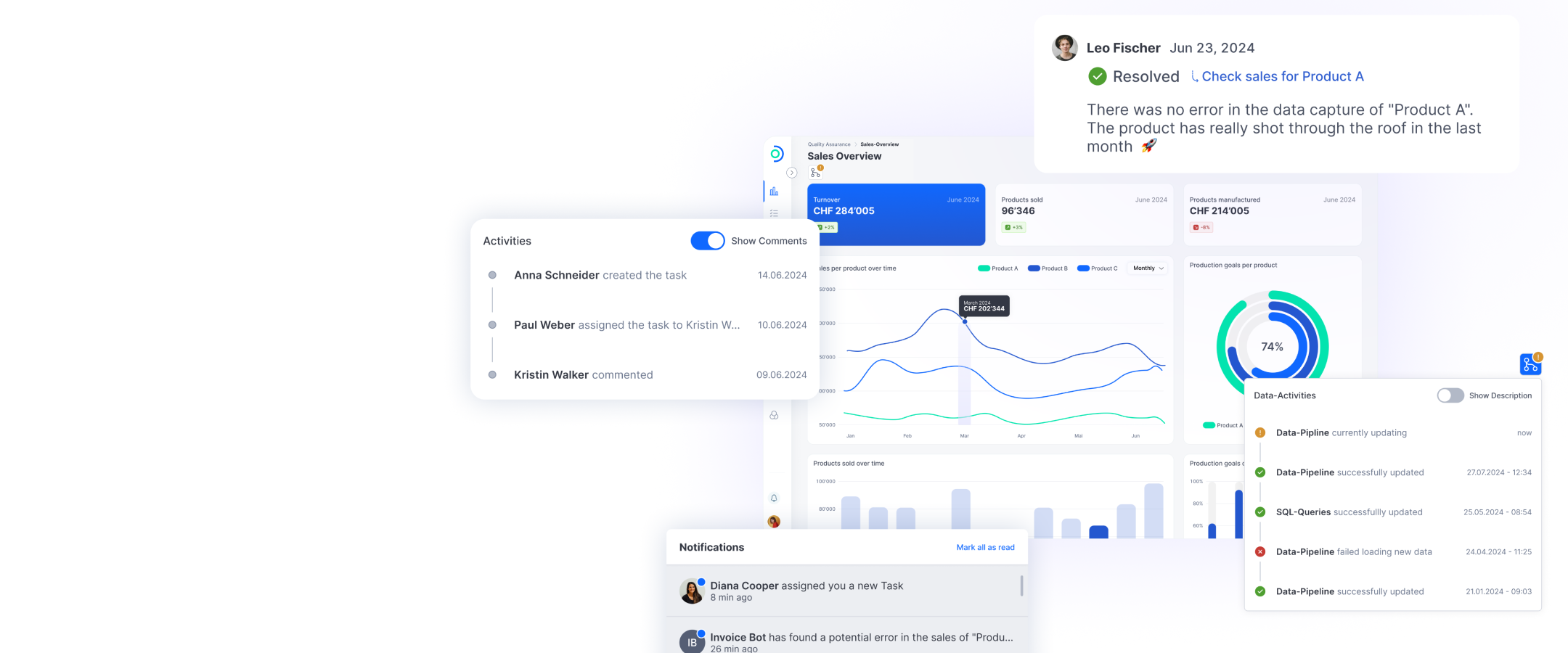
MINT Digital Services, a subsidiary of SUISA, represents musicians and publishers worldwide in their dealings with streaming platforms such as Spotify and Apple Music. Month after month, these platforms deliver billions of individual data points that form the basis for royalty statements. However, the previous systems were reaching their limits. Dashboards were slow and inefficient, business logic was fragmented, and collaboration was timeconsuming and only possible via data exports. SUISA needed a technically powerful platform that would guarantee business users direct and userfriendly access to the data. Open Datastack not only collects and processes data, but also makes it directly usable in daily decisionmaking processes. Specialist departments carry out selfservice analyses, work collaboratively on dashboards, and use interactive workflows to translate findings directly into action. At the same time, the platform is designed to be futureproof. It can be operated flexibly, integrates an MCP server for future AI applications, and works independently of proprietary providers.
End-to-end data platform for all industries
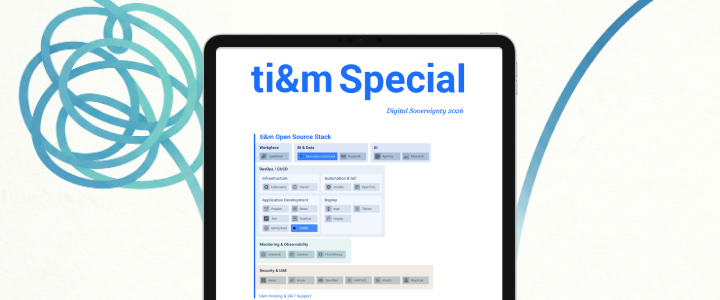
Within twelve months, a modular endtoend platform was created in collaboration with ti&m that seamlessly combines data integration, processing, lakehouse architecture, and governance. The system is fully containerized and built on opensource technologies. Apache Superset enables interactive visualizations, Dagster orchestrates the data pipelines, and Soda Core continuously ensures data quality. By combining the distributed query engine Trino with the open table format Apache Iceberg, storage and computing are separated. This ensures high performance at an optimal cost. The flexible design system seamlessly adapts the interface to SUISA/MINT’s corporate identity. Open Datastack is not only suitable for the music rights industry. Thanks to its modular, platformindependent approach, it can be used in any industry that wants to process large amounts of data efficiently and use it collaboratively.
Digital sovereignty and security
Open Datastack runs on Kubernetes and can be operated in the cloud, onpremises, or locally. ti&m monitors the opensource components, maintains its own forks, and ensures security and compatibility through proactive patch management, even in the event of license changes or endoflife scenarios. Rolebased authorizations (RBAC), attributebased policies (ABAC), and rowlevel security (RLS) allow for granular control all the way down to individual data records. Combined with standardized authentication and authorization procedures and detailed audit logs, Open Datastack meets the highest security requirements.
Data that moves
The platform combines technical excellence with a user interface that looks more like a modern app than a classic BI solution. Business users can intuitively analyze data, start workflows, delegate tasks, and comment directly on dashboards. Introducing the platform has thus fundamentally changed the way SUISA works with streaming data. Data is processed more quickly, analyses are delivered promptly, and specialist departments can collaborate directly on the platform without having to rely on exports. At the same time, the cost structure is more predictable as expensive, consumptionbased models from external providers are no longer required. Open Datastack has a modular structure and can be flexibly expanded to include new data sources, business functions, or AI applications. With Open Datastack, SUISA/MINT has achieved a paradigm shift away from static reports and toward an interactive, collaborative data platform that combines technical excellence, userfriendliness, and digital sovereignty. The solution shows how opensource innovations and ti&m’s expertise come together to create a futureproof platform. Not just for the music industry, but across all sectors.
Open Datastack also impresses the experts
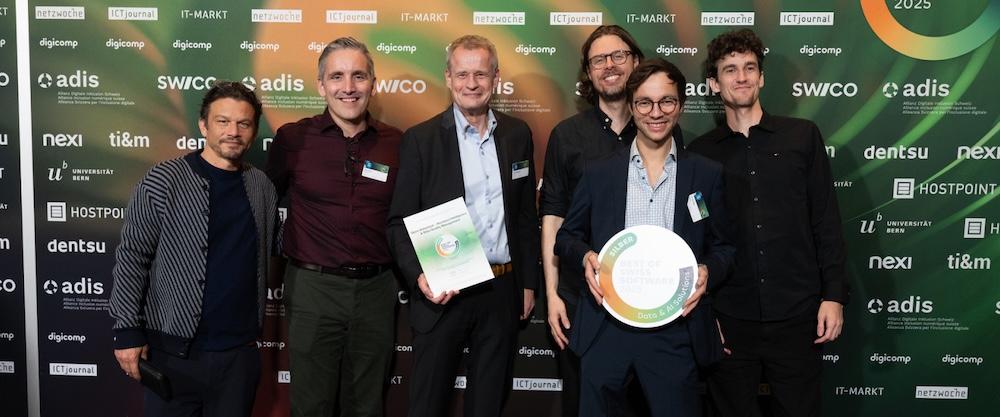
Open Datastack won silver at the Best of Swiss Software 2025. This is proof of the solution’s innovative strength, the benefi ts it provides to specialist departments, and its technological quality.
ti&m Special “AI & Open Source”
Why AI and open source belong together
Special, Innovation
One pot for everything
Smart cooking // The all-in-one solution really does exist – at least when it comes to cooking pots. Wired Cooking has developed a pot that can prepare (almost) any dish perfectly. But that’s not all: it also brews beer and ferments vegetables. And the best part is that you don’t even need a stove with the Wired Cooker. The revolutionary cooker is controlled via an app.
- Sep 21, 2023
Special, Digital-Trust
How Cyber Command benefits from the militia system
Gregor Hofer - Jun 25, 2024
Special, Digital Banking
Quantum computing – opportunities and challenges for Switzerland as a center of innovation
With institutions such as the University of Basel, ETH Zurich and EPFL, as well as initiatives such as the further development of the Center for Quantum Computing and Quantum Coherence (QC2) by QuantumBasel and the University of Basel, Switzerland is a leader in quantum research. This infrastructure attracts international researchers and industry partners and strengthens Switzerland’s position as a major center for quantum technologies.
Damir Bogdan - Mar 17, 2025